Ever wondered what your cat’s feeling or thinking?
Ever wondered what your cat may be trying to communicate with you? Cats use a variety of ways to communicate their feelings and needs. Use this guide to learn how to pay attention to their eyes, tail, mouth, posture and vocalisations and you’ll be a cat whisperer in no time!

Tail position
1. Tail up, curved and relaxed/Question mark tail - This indicates a happy, friendly, confident and curious cat who is open to interacting.
2. Tail down - This may indicate a cat who is unsure or worried. A tucked away tail or a tail that is held tightly to the body can be a sign of discomfort, worry or anxiety.
3. Halloween-cat tail - A cat in this stance is trying to appear larger and scarier than they actually are because they feel scared or threatened.
Tail movement
-
Full tail movement - A cat’s wagging tail can indicate frustration, overwhelm, irritation or excitement, depending on the context. The bigger and faster the movement, generally the stronger the feelings being communicated.
-
End of the tail movement – This tends to indicate engagement, excitement, processing or deciphering something in the environment.

Ear position
1. Ears in a natural relaxed upright or forward position - This cat is likely feeling happy and calm.
2. Ears straight up or focused forwards - This cat is likely alert and curious.
3. Ears turned sideways or back -This cat is likely feeling nervous, irritated, or over stimulated, it’s a good idea to leave this kitty alone!
4. Ears back and flat against head - This cat is feeling scared and defensive. It can also indicate that your cat is feeling threatened, fearful or agitated. Its best to give this cat some space.

Eyes
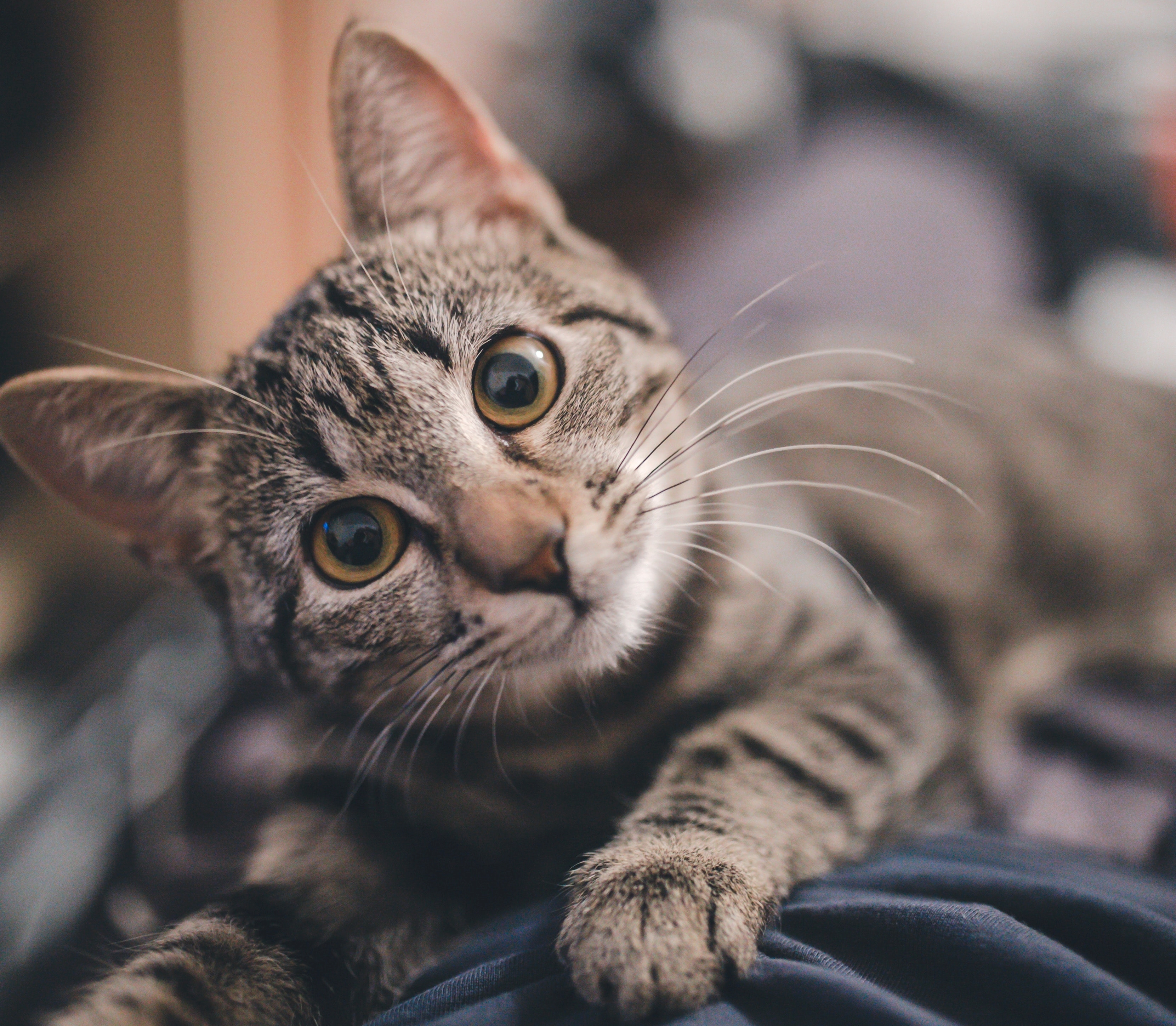
Cats have vertical slit pupils so it is normal for their pupils to be this shape.
1. Dilated pupils - A cat with dilated pupils will have a more rounded shape, similar to the normal pupil shape of humans and dogs for example. Pupils may dilate when a cat is surprised, scared or stimulated.
2. Stare - A cat may stare just because they are intensely observing something (e.g., a toy, bird, person), want something (think cat waiting for food!) or may be communicating, particularly with another cat.
3. Slow blinking or half closed - A cat will slow blink or narrowed eyes can indicate that they trust you, feel safe and comfortable around you. However, sometimes squinting and flattened eyes can be a sign that your cat is in pain. Contact your veterinarian if you are concerned.

Posture
1. Lying on back with belly exposed - This cat is happy, trusts you and feels comfortable. Whilst the exposed belly is a sign of comfort and trust, it is not an invitation for a belly rub, and they may grab your hand if you do try to rub the belly. If your cat growls while lying on their back, they are agitated and you should leave them alone.
2. Rubbing against you - A cat will rub against things to scent mark their territory, this is especially true when they rub their cheeks against something. When a cat does this to you, they are letting you know you are familiar.
3. Kneading - A cat kneads or ‘makes biscuits’ when they are particularly happy and only on people they are content and comfortable. This could also mean that they are creating a soft, safe spot to sleep.

4. Butt wiggling – A cat that has their behind in the air is either relaxed and stretching or playful and ready to pounce.
5. Licking you – A cat that is licking you is showing you affection, they do it in the same way that you show affection when you stroke your cat.
6. Curled up – A cat that curves their tail all around them in a relaxed way, making a fluffy embrace is a happy, satisfied one. This is also the most common sleeping position for cats and means your cat feels calm and safe.
7. Hiding/backing away – A cat trying to hide or appear as small as possible by backing away and curling up is likely expressing fear.
Sounds
Cats can also communicate through a number of different sounds or vocalisations.
1. Purring- The vibrating sound of the purr is a sign that your cat is feeling happy and affectionate. However, abnormal purring, such a purring that is louder than usual or in an unusual context (e.g., when you know they are afraid) can be a sign that your cat is stressed or in pain.
2. Trilling- This sound is somewhere in between a meow and a purr. It’s often used as a greeting or a way to get your attention.
3. Chirping- similar to the trill a cat will chirp to greet you, try and get your attention, and show acknowledgment and approval.
4. Yowling- This sound is a cross between a yodel and a howl and is usually used by entire cats as a call to attract other entire cats to mate.
5. Hissing and growling- A cat that is hissing and growling is likely frightened or angry, so its best to stay away. Sometimes hissing and growling can also be due to pain or injury.
6. Meowing- A meow is a friendly greeting and means your cat is trying to attract your attention.
Interested in learning how to provide the best quality of care for your cat so that they can thrive?
Read about best practice in cat welfare, health, nutrition, and environment.
*These tips were compiled from resources by RSPCA and SPCA.
Read RSPCA's website Keeping Your Cat Safe and Happy at Home for more paw-some tips.