Willowbank's Kea’s Unique Skills Push Him to the Top of the Pecking Order
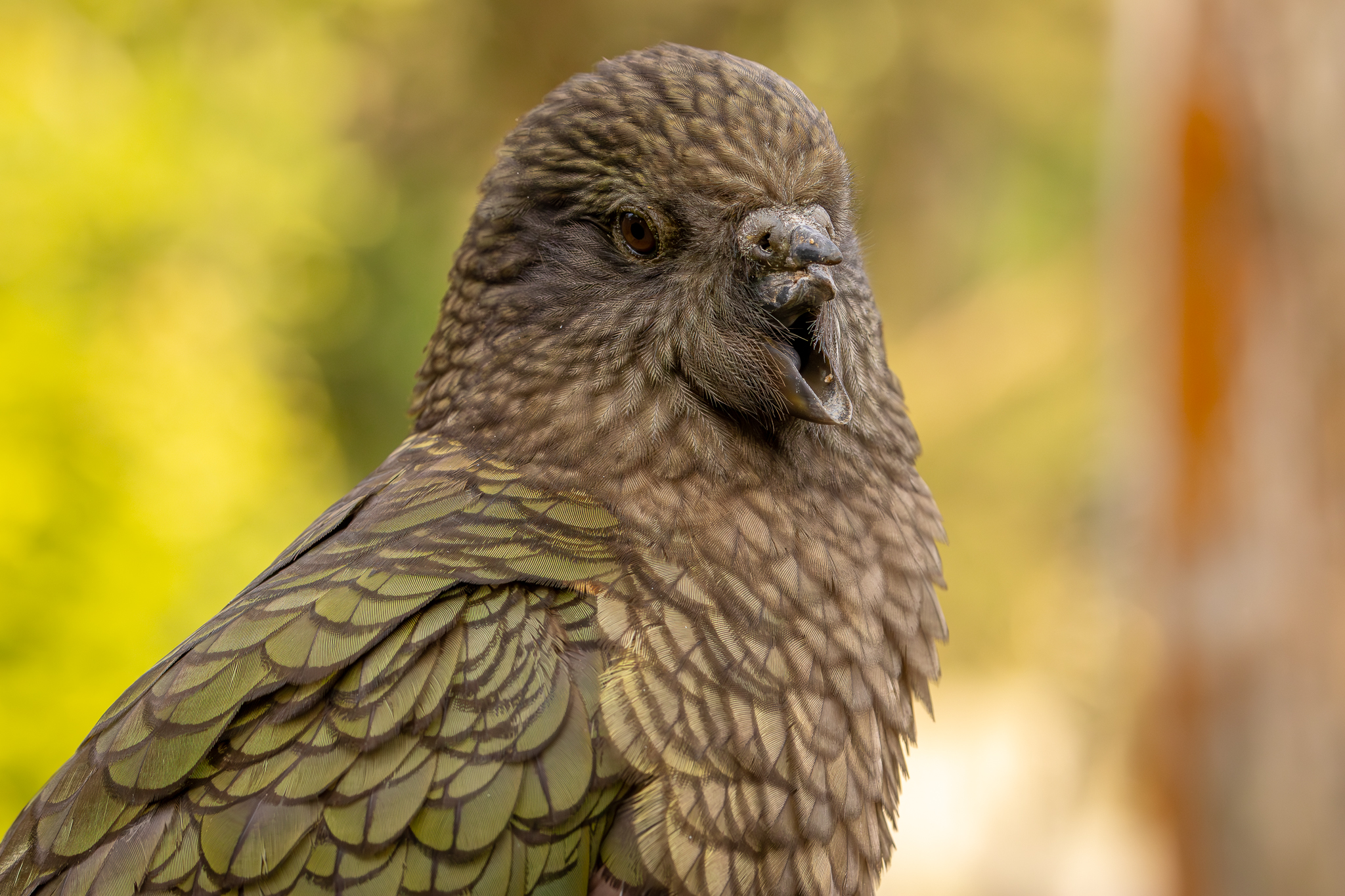
At Willowbank Wildlife Reserve, a kea is challenging long-held assumptions about ability, behaviour, and social hierarchy in birds and offering new insight into how modern zoological institutions can support resilience and welfare in even the most disadvantaged individuals.
In 2014 Bruce the Kea was rescued from the mountains of New Zealand’s South Island with part of his beak missing. And while it wasn’t clear if he would survive, 12 years later he has adapted in amazing ways. Dr Alex Grabham from the University of Canterbury has researched the innovative ways way Bruce has been able to not only survive but thrive.
Deprived of the full structure of a typical beak, he developed an entirely novel method of interaction with other birds: using his lower beak as a precision striking tool during social contests.
Rather than relying on conventional beak-to-beak wrestling typical of kea social dynamics, Bruce employs a unique “jousting” behaviour, lunging in ways that consistently intimidate rivals. Across recorded interactions, he remained undefeated in observed contests, ultimately securing the highest social rank within his group at Willowbank.
This outcome is not simply anecdotal. Researchers documented consistent behavioural outcomes in which Bruce gained priority access to feeding stations, reduced social challenges, and even received preening from other birds, all markers of elevated status within kea social systems.
Bruce’s position highlights the adaptive capacity of kea, a species already renowned for intelligence and problem-solving ability. This case challenges traditional assumptions that physical impairment equates to diminished social success. Instead, it reinforces a growing body of evidence that highly intelligent species may compensate for physical limitations through behavioural flexibility and environmental engagement.
While Bruce’s long-term position within the group may shift as social dynamics evolve, his case already provides valuable insight into resilience, cognition, and welfare outcomes in managed populations.
The findings in this paper were reported in over 200 media outlets across 62 countries, with over 5.3 million views across Instagram/Facebook/YouTube and articles in Science, The New York Times, Le Monde, National Geographic, Forbes, Der Spiegel, El País, Scientific American, Smithsonian Magazine, Al Jazeera, Deutsche Welle, Süddeutsche Zeitung, Le Figaro, New Scientist, ABC Australia, el Mundo, ANSA & La Vanguardia.